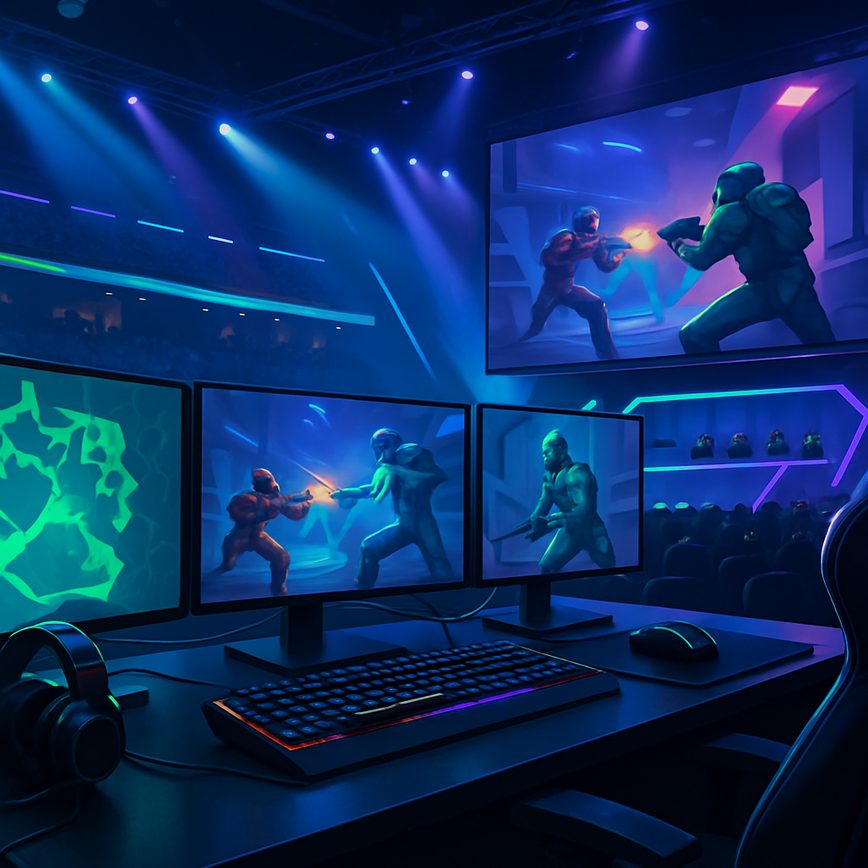
Introduction to Major Esports Leagues
Esports leagues have become a vital component of the modern gaming industry, serving as structured platforms where professional players and teams compete in various gaming tournaments. These leagues offer a highly organized environment that elevates competitive gaming to a professional level, complete with scheduled matches, rankings, and significant prize pools. The growth of esports leagues reflects the increasing popularity and commercial potential of competitive gaming on a global scale.
By bringing together elite players from around the world, esports leagues create thrilling spectacles that captivate millions of fans, both online and in live venues. These leagues cover a wide range of popular game titles, from first-person shooters to real-time strategy and multiplayer online battle arena games. The structure of esports leagues allows enthusiasts to follow their favorite teams and players throughout a season, similarly to traditional sports, which fosters community engagement and sustained interest in gaming tournaments.
Esports leagues also play a crucial role in legitimizing the esports industry, helping to attract sponsors, advertisers, and media coverage. Their professional frameworks provide clarity and consistency, which are essential for long-term investment and growth. Moreover, these leagues open up numerous opportunities for career advancement, not only for players but also for coaches, commentators, and production crews involved in esports events.
Competitions hosted by major esports leagues are more than just games; they are a showcase of skill, strategy, and teamwork that pushes the boundaries of competitive gaming. The intense competition and high stakes involved in these leagues ensure top-tier performances that inspire viewers and aspiring gamers alike. As a result, esports leagues have become integral to the gaming ecosystem, underpinning one of the fastest-growing entertainment sectors worldwide.
Growth and Popularity of Esports Leagues
Esports growth has been nothing short of phenomenal in recent years, driven by a surge in both popularity and viewership across the globe. What was once a niche gaming activity has evolved into a mainstream entertainment powerhouse, attracting millions of fans worldwide. Major esports leagues have capitalized on this momentum, expanding their reach through innovative tournament formats, engaging content, and professional-level competition. This rise in popularity is evident in the increasing number of participants, sponsors, and media attention that esports now commands.
The explosion of audience growth is closely tied to the accessibility of esports content on various streaming platforms. Platforms like Twitch, YouTube Gaming, and Facebook Gaming have played pivotal roles in the success of esports by providing seamless streaming experiences that connect players and fans in real time. These platforms have democratized access to esports events, allowing viewership to soar and creating a global community united by shared passion. The interactivity and social features of streaming platforms further enhance fan engagement, making esports leagues thrive like never before.
Overall, the combination of engaging competition, robust streaming options, and a dedicated fanbase ensures that esports leagues continue to grow in popularity and viewership. This dynamic ecosystem not only fuels esports success but also sets the stage for future innovation and expansion in the digital entertainment landscape.
Types of Esports Leagues
Esports leagues come in various formats that cater to different game genres and player dynamics. The most common league formats include seasonal leagues, tournaments, and ladder systems. Seasonal leagues span several months, featuring regular matches that culminate in playoffs and a championship. Tournaments are often shorter, knockout-style competitions that attract large audiences and offer significant prize pools. Ladder systems allow individual players or teams to climb rankings through continuous play, commonly seen in solo competitive games.
Game genres in esports are diverse, encompassing real-time strategy (RTS), first-person shooters (FPS), multiplayer online battle arenas (MOBA), and fighting games. Popular examples include League of Legends and Dota 2 in the MOBA category, Counter-Strike: Global Offensive and Valorant in FPS, and StarCraft II for RTS. Each genre has unique gameplay mechanics that influence league structure and competitive formats.
Worldwide, esports leagues are structured to fit regional preferences and logistical considerations. North America and Europe often feature franchised leagues with fixed teams and regular seasons, while Asia emphasizes open qualifiers and large-scale tournaments. Additionally, mobile esports have gained prominence in regions like Southeast Asia, introducing new league formats tailored for mobile gameplay. This diversity in esports types and league formats ensures a vibrant global competitive scene.
Overview of Top Global Esports Leagues
In the rapidly evolving world of esports, several major international leagues stand out by bringing together top talent and exhilarating competition from around the globe. These global esports leagues cover a wide variety of popular games, attracting millions of fans and players, making them central to the growth of international tournaments.
One of the most prominent leagues is the League of Legends World Championship (Worlds), organized annually by Riot Games. It features the best teams from regional leagues such as the LCK, LCS, and LEC, competing for the title of world champion. This tournament draws massive viewership and showcases not only the skill but also the strategic depth of global esports competition.
Another major league is the Dota 2 International, hosted by Valve Corporation. Often considered the most prestigious event in the Dota 2 calendar, it boasts some of the highest prize pools in esports history. Top teams from every continent battle for supremacy, making it an unparalleled international tournament that highlights the global nature of esports.
Call of Duty League (CDL) and Overwatch League (OWL) are significant contributors to the first-person shooter (FPS) genre in esports. Both operate with city-based franchises, fostering local fan engagement while also maintaining a competitive international stage. These leagues demonstrate how global esports can blend traditional sports models with digital competition to create exciting and accessible tournaments for fans worldwide.
Additionally, the Rocket League Championship Series (RLCS) and the Counter-Strike: Global Offensive (CS:GO) Major Championships remain favorites in global esports. RLCS garners attention with its unique blend of soccer and vehicular acrobatics, while CS:GO Majors are renowned for their intense, team-based tactical gameplay. Each of these leagues brings a distinct flavor to the international tournaments scene, appealing to diverse player bases and audiences.
Together, these top esports leagues form the backbone of the global esports ecosystem, driving innovation and expanding the reach of competitive gaming. Their international tournaments not only highlight extraordinary skill and teamwork but also foster a vibrant community that spans continents, uniting esports enthusiasts around shared passion and thrilling competition.
League of Legends Championship Series (LCS)
The League of Legends Championship Series (LCS) is one of the premier esports leagues dedicated to Riot Games’ flagship title, League of Legends. Founded in 2013, the LCS has become a cornerstone of competitive gaming in North America, showcasing top-tier talent and building a passionate fanbase. Its structure includes a regular season divided into two splits—Spring and Summer—each culminating in playoffs that determine which teams advance to global events such as the World Championship.
The league currently features ten franchised teams, providing stability and long-term investment in esports infrastructure. This franchising model was introduced in 2018, marking a significant evolution from the earlier promotion and relegation format, and enhancing the professionalism of the league. Riot Games emphasizes player welfare and competitive integrity, making the LCS a highly respected destination for professional players and aspiring talent alike.
Key facts about the LCS include its consistent production of high-quality broadcasts, innovative fan engagement strategies, and substantial prize pools. Over the years, the league has helped propel several players to international stardom. As a Riot Games property, the LCS benefits from seamless integration with the larger League of Legends esports ecosystem, solidifying its position as a major gateway for North American teams on the world stage.
Overwatch League (OWL)
The Overwatch League (OWL) is a premier team-based esports competition developed and managed by Blizzard Entertainment, centered around the popular game Overwatch. Unlike many other esports leagues that focus on individual player achievements, OWL emphasizes city-based franchises, mirroring traditional sports leagues. This format supports regional loyalty and competitive spirit among teams representing different cities worldwide.
OWL’s structure is divided into regular season matches, followed by playoffs and a Grand Finals event. Teams compete in a series of weekly matches during the season, earning points to qualify for the postseason. The league features multiple teams from various regions including North America, Europe, and Asia, each consisting of talented rosters specialized in team coordination and strategic play. This global spread enhances the league’s diversity and competitive depth.
What sets OWL apart from other esports leagues is its franchising model combined with a structured season schedule, which provides a high level of stability and organization. Blizzard Entertainment invests heavily in production quality, broadcasting, and fan engagement, delivering a polished viewing experience on multiple platforms. Additionally, OWL incorporates live events and city-hosted homestand matches that bring fans closer to the action, fostering a unique community atmosphere rarely seen in esports.
Call of Duty League (CDL)
The Call of Duty League (CDL) is a premier professional gaming league that has significantly shaped the landscape of COD esports. It operates under a franchising system where each team secures a city-based slot, similar to traditional sports leagues. This approach not only fosters regional loyalty but also ensures long-term stability and investment in the teams and their infrastructure. The franchising model has been critical in legitimizing professional gaming, particularly within the FPS esports community.
The CDL’s regular season format involves a series of stages where teams compete against each other in multiple matches to accumulate points. Each season culminates in playoffs that determine the ultimate league champion. This structure maintains competitive integrity and provides numerous opportunities for teams to showcase their skills throughout the year. It keeps fans engaged with consistent, high-level competition and allows players to develop and adapt strategically over time.
By pioneering a franchised league model in the FPS esports arena, the Call of Duty League has played a pivotal role in elevating the status of professional gaming. It has attracted major sponsors and expanded viewership, emphasizing the growing commercial viability of esports. The CDL’s success has inspired other FPS titles to explore similar league structures, ultimately advancing the entire ecosystem of competitive shooting games globally.
Impact and Future of Esports Leagues
Esports leagues have become pivotal in shaping the gaming industry, driving its growth and evolution with significant industry impact. By providing structured competition platforms, these leagues have elevated gaming from a niche hobby to a mainstream entertainment phenomenon. Their influence extends beyond just the players and fans; they have created vast economic opportunities, attracting investments, sponsorships, and partnerships with global brands.
The esports future looks promising as technology advancements continue to push competitive gaming’s boundaries. Innovations in streaming technology, virtual reality, and artificial intelligence are transforming how audiences engage with esports content. This progression enhances viewer experiences through immersive broadcasts and interactive features, bridging the gap between players and fans like never before.
Leagues also contribute to developing gaming talents by establishing professional standards, training programs, and career pathways. This structured ecosystem promotes long-term player sustainability and career growth, which in turn attracts more participants and intensifies competition. Furthermore, esports leagues influence game developers to optimize and tailor their games for competitive play, fueling innovation in game design and mechanics.
Looking ahead, the esports industry is expected to integrate with emerging technologies such as blockchain and metaverse platforms. These advancements could revolutionize how tournaments are organized, monetized, and experienced, providing new revenue streams and fan engagement methods. Additionally, global expansion in regions like Asia, Latin America, and Africa will diversify the player base and fan communities, pushing esports into untapped markets.
In summary, the impact and future of esports leagues underscore a dynamic intersection of technology advancement and cultural shifts within the gaming world. As these leagues continue to evolve, they will not only influence the gaming industry but also reshape entertainment and digital interaction on a global scale.
Economic and Cultural Influence
The esports economy has seen substantial growth over recent years, driven by increasing prize pools, tournament revenues, and expanding audience base. This burgeoning market has attracted significant investments and created numerous job opportunities within the industry, benefiting players, organizers, and related businesses alike. The rise of major esports leagues has enhanced economic benefits by fostering competitive environments that generate steady income streams through ticket sales, merchandising, and broadcasting rights.
Sponsorships play a critical role in fueling this economic momentum. Brands from diverse sectors such as technology, beverage, and apparel are actively sponsoring esports leagues and teams, recognizing the unique opportunity to engage with an enthusiastic and youthful demographic. The growing sponsorship deals not only provide financial backing but also help in elevating the visibility and professionalism of esports, making it a lucrative field for both investors and participants.
Beyond economics, the cultural impact of esports leagues is profound. Esports has transitioned from a niche hobby to a widely accepted form of entertainment, with mainstream media coverage and celebrity endorsements contributing to its normalization. This cultural acceptance fosters a sense of community and shared identity among fans worldwide, bridging geographical and social gaps. As a result, esports is increasingly recognized not just as a sport but as a cultural phenomenon that shapes global entertainment trends.
Technological Innovations Shaping Esports
The esports industry is rapidly evolving thanks to cutting-edge esports technology that is enhancing both player performance and viewer experience. Streaming tech plays a pivotal role, enabling seamless broadcasting of tournaments to millions worldwide with minimal latency and high-quality visuals. Platforms like Twitch and YouTube Gaming harness sophisticated content delivery networks and interactive chat features, making esports more engaging than ever.
Virtual reality (VR) esports is an emerging frontier that promises to revolutionize how games are played and watched. VR headsets and immersive environments allow competitors and fans to experience esports with unprecedented presence and interactivity. This innovation challenges traditional formats and opens up new possibilities for gameplay mechanics and audience participation.
Artificial intelligence (AI) is being integrated into coaching tools and analytics to provide players and teams with real-time strategic insights. AI-driven data analysis helps identify strengths and weaknesses, optimizing training regimens and in-game decision-making. Additionally, AI contributes to enhancing broadcasting with automated highlights and crowd engagement metrics.
Collectively, these technological advancements—spanning VR esports, streaming tech, and AI—are shaping the future of esports leagues, making competitions more dynamic, accessible, and immersive for all stakeholders involved.

I’ve been following competitive gaming since the early days of StarCraft, and the strategic depth behind esports betting keeps me hooked. I love breaking down match stats and odds to help readers make informed decisions while enjoying the excitement of the scene.